Not every plumbing problem is a plumbing emergency.
A dripping tap, slow-draining sink or minor leak can be frustrating, but many problems can wait until a normal plumbing appointment. A burst pipe, uncontrolled leak or sewage backing up into your home is a very different situation.
Knowing the difference matters because acting quickly during a genuine plumbing emergency can help prevent water damage, protect your home and reduce the cost of repairs.
In this guide, we’ll explain what is usually classed as a plumbing emergency in London, what you should do first, when you should contact your water company and when you need an emergency plumber.
What Is a Plumbing Emergency?
A plumbing emergency is generally a plumbing problem that requires immediate or urgent attention because it could cause significant damage, create a health risk or leave an essential facility unusable.
Common examples include:
- A burst water pipe
- A major uncontrolled leak
- Water rapidly flooding part of your home
- Sewage backing up into the property
- A blocked toilet when it is the only toilet available
- A serious leak near electrical equipment
- A plumbing failure that is causing significant property damage
- A major loss of water caused by an internal plumbing fault
The key question is not simply, “Is something broken?”
Ask instead:
Could waiting until tomorrow cause serious damage or make the situation dangerous?
If the answer is yes, treat the problem as urgent.
7 Plumbing Problems That Can Be an Emergency
1. A Burst Pipe
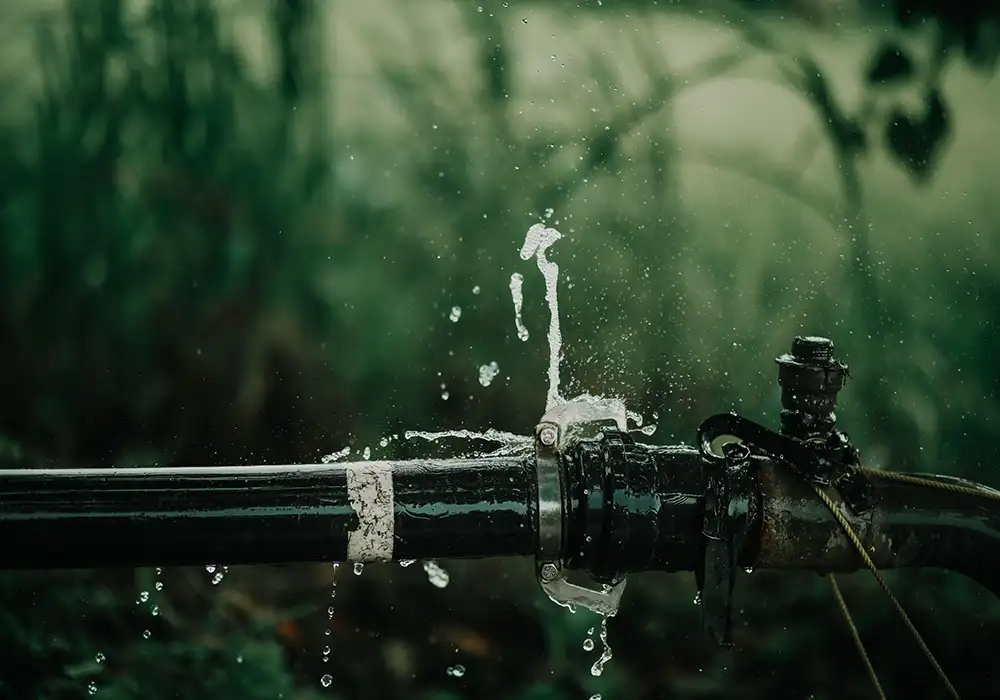
A burst pipe is one of the clearest examples of a plumbing emergency.
Water can escape rapidly from a damaged pipe and quickly spread through floors, ceilings, walls and cupboards.
Even a relatively small pipe can release a large amount of water if the supply remains switched on.
If a pipe bursts inside your home:
- Turn off the water supply at the internal stop tap.
- Turn off your boiler or central heating if appropriate.
- Open cold taps to help drain the system.
- Move furniture and belongings away from the water.
- If water has reached electrical equipment, switch off the electricity at the mains only if it is safe to do so.
- Contact a qualified plumber.
WaterSafe’s advice on what to do if a pipe bursts provides the recommended emergency steps.
Thames Water also advises homeowners to locate their stop tap and turn off the water if a pipe bursts inside the property.
Thames Water’s guidance on burst pipes provides further information about dealing with a burst pipe and checking for leaks.
2. A Major or Uncontrolled Water Leak
Not every leak is an emergency.
A small dripping tap is normally a routine repair. A pipe joint that is slowly leaking into a cupboard may also be possible to deal with during a normal appointment.
But a leak that is rapidly releasing water, damaging your property or cannot be controlled should be treated as urgent.
Signs that a leak may be serious include:
- Water spreading rapidly across the floor
- Water coming through a ceiling
- A pipe spraying or releasing a large amount of water
- Water entering walls or ceilings
- A leak that cannot be isolated
- Visible damage to flooring, plaster or furniture
WaterSafe’s advice for dealing with a leak at home recommends turning off the water at the stop tap and taking steps to reduce the amount of water escaping.
If you are dealing with a serious leak and need professional help, professional plumbing services can help identify and repair the problem.
3. Sewage Backing Up Into Your Home
Sewage entering your home is more than an ordinary blockage.
If wastewater is coming back through a toilet, bath, shower or floor drain, there may be a serious blockage in the drainage system.
This can create unpleasant smells, property damage and potential hygiene problems.
If sewage is backing up:
- Stop using toilets, sinks, baths and showers if possible.
- Keep children and pets away from contaminated water.
- Do not attempt to clean significant sewage contamination without appropriate protection.
- Check whether the problem affects other properties.
- Contact the appropriate water or sewerage company if you suspect a public sewer problem.
- Contact a plumber if the blockage is within your private drainage system.
If the problem is affecting several properties, the issue may be further along the shared or public drainage system rather than inside your home.
4. A Blocked Toilet When It Is Your Only Toilet
A blocked toilet isn’t always an emergency.
If your property has several toilets and one becomes blocked, you may be able to arrange a normal repair.
However, the situation becomes much more urgent if:
- You have only one toilet in the property
- The toilet is completely unusable
- Wastewater is backing up
- The toilet is overflowing
- You have vulnerable occupants who depend on the facility
In this situation, prompt professional assistance may be appropriate.
WaterSafe’s emergency plumber guidance explains when emergency plumbing assistance may be appropriate for leaks, burst pipes and other plumbing emergencies.
5. Water Near Electrical Equipment
Water and electricity are a dangerous combination.
If water is leaking near electrical sockets, appliances, consumer units or other electrical equipment, don’t take unnecessary risks trying to investigate the leak yourself.
If it is safe to do so, switch off the electricity at the mains and keep away from wet electrical equipment.
Do not touch electrical equipment while standing in water.
If there is an immediate danger to life or a serious electrical hazard, contact the appropriate emergency service.
Once the immediate danger has been dealt with, the plumbing problem itself may also require professional attention.
6. No Water Because of an Internal Plumbing Fault
A complete loss of water can be extremely inconvenient, but it isn’t always a plumbing emergency.
First, check whether your neighbours also have no water.
If several properties are affected, the problem may be with the public water supply rather than your home’s plumbing.
If your neighbours have water but your property does not, the problem may be inside your property.
WaterSafe advises that homeowners experiencing no water or very low pressure should contact their local water company, particularly when the issue may relate to the wider water supply.
WaterSafe’s emergency plumbing guidance explains when you should contact your water company rather than an emergency plumber.
7. A Plumbing Failure Causing Serious Property Damage
Sometimes the plumbing fault itself isn’t unusual, but the consequences make it an emergency.
For example:
A leaking washing machine hose might normally be a simple repair. But if the hose has failed completely and water is flooding the kitchen, the situation becomes urgent.
Similarly, a leaking radiator valve might be a routine repair under normal circumstances. If it is releasing enough water to damage flooring and cannot be isolated, you need to act quickly.
The severity of the consequences is often what determines whether a plumbing problem is an emergency.
Problems That Usually Aren’t Plumbing Emergencies
It is also useful to know what normally does not require an emergency plumber.
A Dripping Tap
A tap that slowly drips from the spout is annoying and should be repaired, but it is usually not an emergency.
plumbing services can help if the tap needs a washer, cartridge or other replacement component.
A Slow-Draining Sink
A sink that drains slowly but is still usable can usually be dealt with as a routine plumbing issue.
You can often try simple methods such as cleaning the trap or using a suitable plunger before arranging professional help.
A Minor Toilet Blockage
If the toilet is blocked but there is another usable toilet in the property and there is no overflowing wastewater, it may not require an emergency call-out.
Low Water Pressure
Low water pressure can have many causes and isn’t necessarily an emergency.
Check whether the problem affects the whole property or only one tap. If your neighbours are experiencing the same problem, contact your water company.
If the problem is isolated to your property, a plumber may need to investigate the internal plumbing.
A Small, Contained Leak
A small leak underneath a sink that is safely contained and not causing damage may be suitable for a normal plumbing appointment.
However, don’t ignore it indefinitely. Small leaks can become bigger problems.
What Should You Do First in a Plumbing Emergency?
When something goes wrong, the first few minutes can make a significant difference.
Step 1: Stop the Water
If water is escaping from your internal plumbing, locate your stop tap and turn it off.
The stop tap is often located under the kitchen sink, although its exact location varies between properties.
WaterSafe’s general plumbing advice includes guidance on locating and using your internal stop tap.
Step 2: Reduce the Damage
Move furniture, electrical equipment and personal belongings away from the affected area if it is safe to do so.
Use towels, buckets or other suitable materials to contain escaping water temporarily.
Step 3: Protect Yourself From Electrical Hazards
If water has reached electrical equipment, don’t touch the equipment while standing in water.
If safe, isolate the electricity at the mains.
Step 4: Identify the Source
Try to establish whether the water is coming from:
- A pipe
- A tap
- A toilet
- A radiator
- A washing machine connection
- A boiler or heating system
- An external source
Don’t dismantle equipment if you are unsure what you are doing.
Step 5: Decide Who You Need to Contact
Depending on the situation, you may need:
- An emergency plumber
- Your landlord
- Your home insurer
- Your water company
- An electrician
- The emergency services
Choosing the right person can prevent delays and unnecessary costs.
When Should You Call Thames Water Instead of a Plumber?
This is an important distinction for London properties.
If the problem is with your internal plumbing, you will generally need to arrange a plumber.
Thames Water explains that leaks within your property boundary, including internal plumbing, are generally your responsibility if you own the property. If you rent, your landlord is responsible for fixing leaks.
Thames Water’s guidance on leaks at home explains the difference between leaks on your property and public water pipe problems.
If the problem appears to be a public water main or a wider supply issue affecting multiple properties, contact Thames Water instead.
Thames Water’s incident guide explains how it handles wider water supply incidents, including burst mains and flooding affecting multiple customers.
What About a Burst Water Main Outside Your Property?
A burst pipe inside your home and a burst water main in the street are not the same problem.
If you see water coming from the road, pavement or public area, don’t start digging or attempting to repair the pipe yourself.
It may be a problem with the public water network and should be reported to the relevant water company.
If your neighbours are also experiencing a loss of water or low pressure, this is another indication that the problem may be affecting the wider water network.
Does a Plumbing Emergency Always Need an Emergency Plumber?
Not necessarily.
The term “emergency plumber” describes the urgency of the situation, not a requirement to call someone immediately for every plumbing fault.
For example:
A dripping tap → usually routine.
A slow sink → usually routine.
A burst pipe flooding the property → emergency.
A toilet blocked with sewage overflowing into the bathroom → emergency.
A small leak contained inside a cupboard → potentially routine.
A major leak spreading through a ceiling → emergency.
The important thing is to assess the risk and consequences, not simply the fact that something has stopped working.
What If You Rent Your London Home?
If you are renting, you should normally inform your landlord or managing agent as soon as possible when a serious plumbing problem occurs.
This is particularly important for:
- Burst pipes
- Major leaks
- Sewage problems
- Loss of essential water supply
- Serious water damage
Don’t delay reporting a serious problem because you are unsure who should pay for the repair.
If there is an immediate risk of significant damage, take reasonable steps to stop the water and protect the property first, then contact your landlord or managing agent.
Thames Water states that if you rent a property, your landlord is responsible for fixing leaks within the property.
Thames Water’s guidance for rented properties and leaks provides further information about responsibility.
Can Insurance Cover a Plumbing Emergency?
Some home insurance policies include cover for certain plumbing emergencies, leaks or resulting water damage.
However, policies differ considerably.
Before assuming that your insurance will pay for an emergency plumber, check your policy documents or contact your insurer.
WaterSafe also recommends checking your home insurance when dealing with a burst pipe or significant leak.
WaterSafe’s advice on burst pipes and insurance explains why checking your cover can be useful after a plumbing emergency.
How to Prevent Plumbing Emergencies
You can’t prevent every plumbing emergency, but a few simple habits can reduce the risk.
Know Where Your Stop Tap Is
Don’t wait until a pipe bursts to discover that you don’t know where the stop tap is.
Find it now and make sure it can be operated.
Check Visible Pipework
Occasionally inspect accessible pipes, valves and connections for:
- Corrosion
- Dampness
- Water stains
- Drips
- Cracks
- Limescale deposits
Replace Damaged Flexible Hoses
Washing machine and dishwasher hoses can deteriorate over time.
If a hose shows signs of damage or deterioration, consider replacing it before it fails.
Don’t Ignore Small Leaks
A small leak can be an early warning sign of a larger problem.
Fixing it early may prevent water damage later.
Know Your Plumbing System
Knowing where your stop tap, isolation valves and major plumbing connections are located can make an emergency much easier to manage.
Plumbing Emergency in London? Here’s the Honest Answer
There is no single list that makes every plumbing problem an “emergency”.
The real question is whether the problem presents an immediate risk of:
- Significant water damage
- Sewage contamination
- Loss of an essential facility
- Electrical danger
- Serious property damage
- Rapidly worsening conditions
A dripping tap usually isn’t an emergency.
A burst pipe flooding your home definitely is.
A slow sink usually isn’t an emergency.
Sewage backing up into your home can be.
Understanding that difference can help you respond quickly when it matters and avoid paying emergency call-out rates for a problem that can safely wait for a normal appointment.
Need Emergency Plumbing Help in London?
If you have a burst pipe, serious leak, sewage backup or another plumbing problem that cannot safely wait, professional assistance may be necessary.
Plumbing Services London can be linked to Homacord’s Plumbing page for professional plumbing assistance.
For less urgent plumbing problems, you can also arrange a normal appointment rather than treating every issue as an emergency.
If the problem involves several maintenance issues around your property, Homacord can link to Homacord’s main website and property maintenance service.
Frequently Asked Questions
What is considered a plumbing emergency?
A plumbing emergency is generally a problem that needs urgent attention because it could cause significant property damage, create a health or safety risk, or leave an essential facility unusable.
Is a dripping tap a plumbing emergency?
Usually not. A dripping tap should be repaired, but it normally does not require an emergency call-out unless the leak is severe or causing significant damage.
Is a burst pipe an emergency?
Yes. A burst pipe can release a large amount of water and cause serious damage to floors, walls, ceilings and belongings. Turn off your water supply and arrange professional help as quickly as possible.
What should I do if a pipe bursts?
Turn off the water supply at your stop tap, open cold taps to drain the system, move belongings away from the water and contact a qualified plumber. If water has reached electrical equipment, isolate the electricity only if it is safe to do so.
Is a blocked toilet an emergency?
It depends. A blocked toilet is more urgent if it is your only toilet, is overflowing or is causing wastewater to back up into the property.
Should I call Thames Water or a plumber?
If the problem is inside your property, such as an internal leak or burst pipe, you will generally need a plumber. If you suspect a problem with the public water network or a burst water main affecting multiple properties, contact Thames Water.
What if sewage is backing up into my home?
Stop using toilets, sinks, baths and showers if possible and keep people and pets away from contaminated water. You may need to contact your water company if the problem could involve a public sewer, as well as a plumber for private drainage problems.
Does my landlord have to fix a plumbing emergency?
For rented properties, responsibility depends on the problem and the tenancy arrangement. Serious plumbing problems should be reported to your landlord or managing agent immediately. Thames Water states that landlords are responsible for fixing leaks within rented properties.
Can a plumbing emergency cause electrical danger?
Yes. Water reaching electrical sockets, appliances, cables or other electrical equipment can create a serious hazard. Do not touch wet electrical equipment while standing in water.
Should I have an emergency plumber’s number before I need one?
It can be useful. Knowing who to contact before a burst pipe or major leak happens can save valuable time during an emergency.
WaterSafe’s emergency plumber guidance can also help you find a recognised plumber when you need urgent assistance.