Boiler losing pressure can be frustrating, especially when you find yourself having to top it up every few days. Topping it up may feel like a solution — but it may only be treating the symptom.
A small drop in pressure can sometimes happen after bleeding radiators or through normal system behaviour. But if the pressure repeatedly falls, there is usually a reason that needs investigating.
A leak somewhere in the heating system is one of the most common causes, but it isn’t the only possibility. Problems with radiator valves, the expansion vessel, pressure relief valve or other components can also cause repeated pressure loss.
In this guide, we’ll explain the main reasons your boiler may keep losing pressure, what you can safely check yourself and when it’s time to call a qualified heating engineer in London.
What Should Boiler Pressure Be?
Before trying to work out why your boiler is losing pressure, it’s important to understand what the pressure gauge is telling you.
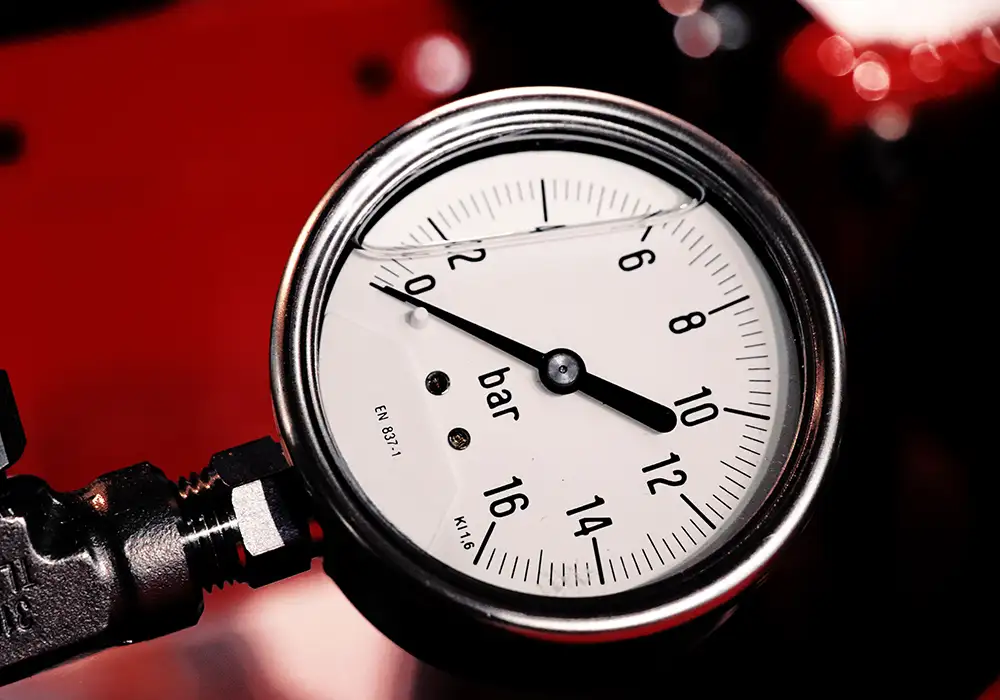
For many sealed central-heating systems, boiler pressure is generally around 1 to 1.5 bar when the system is cold, although the correct pressure varies between boiler models. Always check your boiler manufacturer’s instructions for the recommended range.
When the heating is running, the pressure normally rises because the water inside the system expands as it heats.
A small increase is normal.
What isn’t normal is pressure that repeatedly falls significantly, particularly if you keep having to repressurise the system.
Why Does My Boiler Keep Losing Pressure?
There are several possible explanations.
The four most common causes are:
- A leak somewhere in the heating system
- Water lost after bleeding radiators
- A problem with the expansion vessel
- A pressure relief valve that is releasing water
Let’s look at each one.
1. A Leak in the Heating System
A leak is one of the first things to investigate when boiler pressure repeatedly drops.
The leak doesn’t necessarily have to be underneath the boiler.
Water can escape from:
- Radiator valves
- Radiator connections
- Visible heating pipework
- Boiler components
- Joints and fittings
- Hidden pipework
Over time, corrosion, loose connections or damaged components can allow water to escape from the sealed heating circuit.
Vaillant’s guide to boiler pressure loss
What Does a Heating-System Leak Look Like?
You may not always see an obvious puddle of water.
Look for:
- Damp patches around radiators
- Rust or corrosion
- Water staining
- Discoloured paint
- Flaking skirting boards
- Damp flooring
- Moisture around radiator valves
- Water marks near pipe connections
Some small leaks can be difficult to spot because water may evaporate from hot pipework before it forms an obvious puddle.
Baxi’s advice on low boiler pressure also recommends checking pipes, radiators and radiator valves for signs of staining, rust or corrosion.
What If You Can’t Find a Leak?
Don’t assume there isn’t one.
Heating pipework can run underneath floors, inside walls or through difficult-to-access areas.
If the pressure continues falling and there is no visible leak, a qualified heating engineer may need to investigate further.
Do not remove the boiler casing yourself.
2. Bleeding Your Radiators Can Reduce Pressure
Bleeding radiators releases trapped air from the heating system.
This can sometimes be necessary when a radiator has cold areas, particularly towards the top.
However, bleeding a radiator can also release some water from the system and cause the boiler pressure to fall.
If you have recently bled several radiators and noticed that the pressure has dropped afterwards, this may explain the change.
Vaillant’s guidance on boiler pressure loss explains that releasing air or water when bleeding radiators can reduce system pressure.
The important distinction is whether the pressure drops once after bleeding or keeps falling repeatedly.
If it keeps dropping, there may be another problem that needs investigating.
3. The Expansion Vessel May Have a Problem
The expansion vessel is an important component in a sealed central-heating system.
When heating water gets hotter, it expands.
The expansion vessel provides space for this expansion and helps the system maintain controlled pressure.
If the expansion vessel loses its charge or develops a fault, the pressure behaviour of the heating system can become abnormal.
You might notice that:
- Pressure rises significantly when the heating is on
- Pressure falls considerably when the system cools
- The pressure gauge moves between unusually low and high readings
- The pressure relief valve starts releasing water
Baxi’s advice on low boiler pressure identifies an expansion vessel that needs recharging or replacing as a possible cause of low boiler pressure.
This is not a repair you should attempt by opening the boiler casing.
4. The Pressure Relief Valve May Be Releasing Water
Your heating system has safety components designed to protect it from excessive pressure.
One of these is the pressure relief valve (PRV).
If system pressure becomes too high, the valve can release water to reduce the pressure.
If the valve doesn’t close properly afterwards, or becomes contaminated or faulty, water may continue to escape.
That can eventually cause the boiler pressure to fall.
Baxi’s information about low boiler pressure explains that a problem with the pressure relief valve can contribute to pressure loss.
If you notice water coming from the discharge pipe outside your property, don’t simply keep topping up the boiler without finding out why.
Why Does My Boiler Pressure Drop Overnight?
If you notice that the pressure is acceptable when the heating is running but significantly lower the following morning, temperature changes may be part of the explanation.
Heating water expands as it gets hotter and contracts as it cools.
This means the pressure gauge can move between different readings depending on whether the system is hot or cold.
Vaillant’s guide to normal boiler pressure explains how pressure can change as the heating system heats up and cools down.
However, a significant or repeated pressure loss shouldn’t simply be dismissed as normal temperature variation.
If you repeatedly need to add water to the system, investigate the reason rather than treating repressurisation as the permanent solution.
Why Does My Boiler Pressure Drop After Heating?
This is slightly different from a normal small change in pressure.
When the heating switches on, water inside the system becomes hotter and expands, so pressure normally rises.
When the system cools, pressure falls again.
A modest change is expected.
But if the pressure rises considerably when the heating is operating and then drops dramatically once the system cools, it may indicate a problem with the expansion vessel or another component.
That pattern is worth having checked by a qualified heating engineer.
Can I Repressurise My Boiler Myself?
In many modern heating systems, homeowners can repressurise the system using the filling loop if they are confident doing so and follow the manufacturer’s instructions.
The exact procedure varies between boilers.
Some systems use a traditional filling loop, while others use different filling devices.
Vaillant’s guide to repressurising a boiler explains the general process and why you should follow the instructions for your specific appliance.
If you’re unsure how your filling system works, don’t guess.
Check your boiler manual or ask a qualified heating professional.
What You Shouldn’t Do
Do not:
- Keep adding water every few days without investigating the cause
- Remove the boiler casing
- Attempt to repair internal boiler components
- Adjust safety components yourself
- Ignore repeated pressure loss
Repressurising may restore the boiler temporarily, but it doesn’t necessarily fix the reason why the pressure was lost.
How Often Should You Need to Repressurise a Boiler?
There isn’t a useful universal rule saying every boiler should be repressurised after a particular number of weeks or months.
If you’ve had to repressurise the system once after maintenance, such as bleeding radiators, that may not necessarily indicate a serious fault.
But if you’re repeatedly having to top it up, that’s different.
A boiler that keeps losing pressure deserves investigation.
Vaillant’s advice on boiler pressure recommends investigating continued pressure loss rather than repeatedly repressurising the system.
How to Check for a Visible Heating Leak
Before calling an engineer, you can carry out a simple visual inspection.
Start with the areas that are easiest to access.
Check Around Your Radiators
Look closely at:
- Radiator valves
- Pipe connections
- The floor underneath radiators
- Skirting boards
- Nearby walls
Look for staining, corrosion or dampness.
Check Accessible Pipework
Look at visible heating pipes around your home.
Pay particular attention to joints and connections.
If you find moisture, don’t start dismantling the connection yourself.
Check Under the Boiler
You can look for visible signs of water underneath the appliance.
However, do not remove the boiler casing.
Internal boiler components should only be accessed by a suitably qualified professional.
What If the Boiler Is Losing Pressure but There Is No Leak?
This is one of the situations where professional diagnosis becomes particularly useful.
If you’ve checked the accessible radiators and pipework and cannot find any water, possibilities include:
- A hidden leak
- An internal boiler leak
- Expansion vessel problems
- Pressure relief valve problems
- Another faulty component
Vaillant’s explanation of boiler pressure loss covers several possible causes when the reason for falling pressure isn’t immediately obvious.
At this point, repeatedly topping up the pressure isn’t a proper solution.
Is Low Boiler Pressure Dangerous?
Low boiler pressure is not normally considered dangerous by itself.
Modern boilers have safety systems designed to prevent operation when conditions are outside their safe operating range.
However, the reason behind the pressure loss may still need attention.
For example, a leaking component can eventually cause water damage, while a fault inside the boiler requires professional diagnosis.
Vaillant’s advice on low boiler pressure explains what low pressure means and what homeowners should check.
If you smell gas, suspect a carbon-monoxide problem or believe there is an immediate safety risk, don’t treat it as a simple pressure issue. Follow the appropriate emergency safety procedure and use a qualified Gas Safe registered engineer for gas-related boiler work.
When Should You Call a Heating Engineer?
Professional help is particularly appropriate if:
- Boiler pressure keeps falling
- You need to repressurise repeatedly
- You can see water leaking from the heating system
- You suspect a hidden leak
- The pressure rises significantly when heating is on
- The pressure relief valve appears to be releasing water
- The boiler displays a fault code
- The boiler stops working because of low pressure
- You suspect an internal boiler fault
- You cannot identify the cause of the pressure loss
If your boiler continues losing pressure, heating services can link to Homacord’s Heating page for professional assistance.
When Is Boiler Pressure a Bigger Warning Sign?
One of the biggest mistakes homeowners make is treating every low-pressure reading as the actual problem.
Sometimes low pressure is simply the result of another problem.
For example:
Leak → water leaves system → pressure falls → boiler may stop working.
Or:
Pressure rises excessively → safety valve releases water → system loses water → pressure falls.
In both situations, adding water only addresses the final step.
The underlying cause still needs attention.
Boiler Pressure Keeps Dropping in Your London Home?
If you’ve had to repressurise your boiler more than once and the pressure keeps falling, don’t automatically assume that you just need to add more water.
Check the obvious areas first.
Look around radiators and accessible pipework for signs of leaks. Check whether the pressure changes significantly between a cold and heated system.
If the problem continues, professional diagnosis can help identify whether you’re dealing with a leak, expansion vessel problem, pressure relief valve issue or another fault.
Heating Services can link directly to Homacord’s Heating page if you need professional help with a boiler or central-heating problem.
For wider property maintenance needs, Homacord links naturally to the main Homacord website.
Frequently Asked Questions
Why does my boiler keep losing pressure?
The most common causes include leaks in the heating system, water lost during radiator bleeding, expansion vessel problems and issues with the pressure relief valve.
How often should I top up my boiler pressure?
You shouldn’t need to repeatedly top up a healthy sealed heating system. If you’re having to repressurise the boiler regularly, the reason for the pressure loss should be investigated.
Is it normal for boiler pressure to drop overnight?
A small change can occur as the heating system cools because the water contracts. A significant or repeated pressure drop, however, may indicate a leak or another fault.
What pressure should my boiler be?
For many domestic sealed systems, pressure is commonly around 1 to 1.5 bar when cold, but the correct range depends on your boiler and heating system. Always follow the manufacturer’s instructions.
Vaillant’s advice on boiler pressure
Can I repressurise my boiler myself?
Some modern boilers allow homeowners to repressurise the system using a filling loop or filling device. Follow the instructions for your specific boiler. If you are unsure, ask a qualified professional.
Why does my boiler pressure rise when the heating is on?
Water expands as it heats, so some increase in pressure is normal. A very large increase can indicate a problem with the expansion vessel or another part of the heating system.
Vaillant’s guide to boiler pressure
Can bleeding radiators cause low boiler pressure?
Yes. Bleeding radiators can release air and some water from the heating system, which can reduce system pressure.
Vaillant’s guidance on bleeding radiators and pressure loss
Why is my boiler losing pressure but I can’t see a leak?
The leak could be hidden inside walls, floors or other inaccessible parts of the heating system. It could also be related to an internal boiler component, the expansion vessel or pressure relief valve.
Should I keep topping up a boiler that loses pressure?
No. Repressurising can temporarily restore the system, but repeatedly doing it without investigating why pressure is being lost can leave the underlying fault unresolved.
When should I call a heating engineer?
If the pressure repeatedly falls, you cannot find the cause, the boiler displays a fault, you see signs of a leak or you suspect an internal boiler problem, arrange for a qualified heating engineer to investigate.